- By admin
- February 18, 2026
- 0 Comments
Food Menu Displays
Resturants Menu Screens
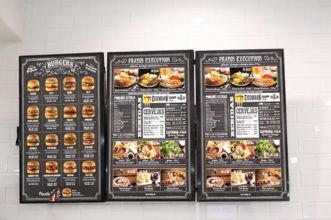
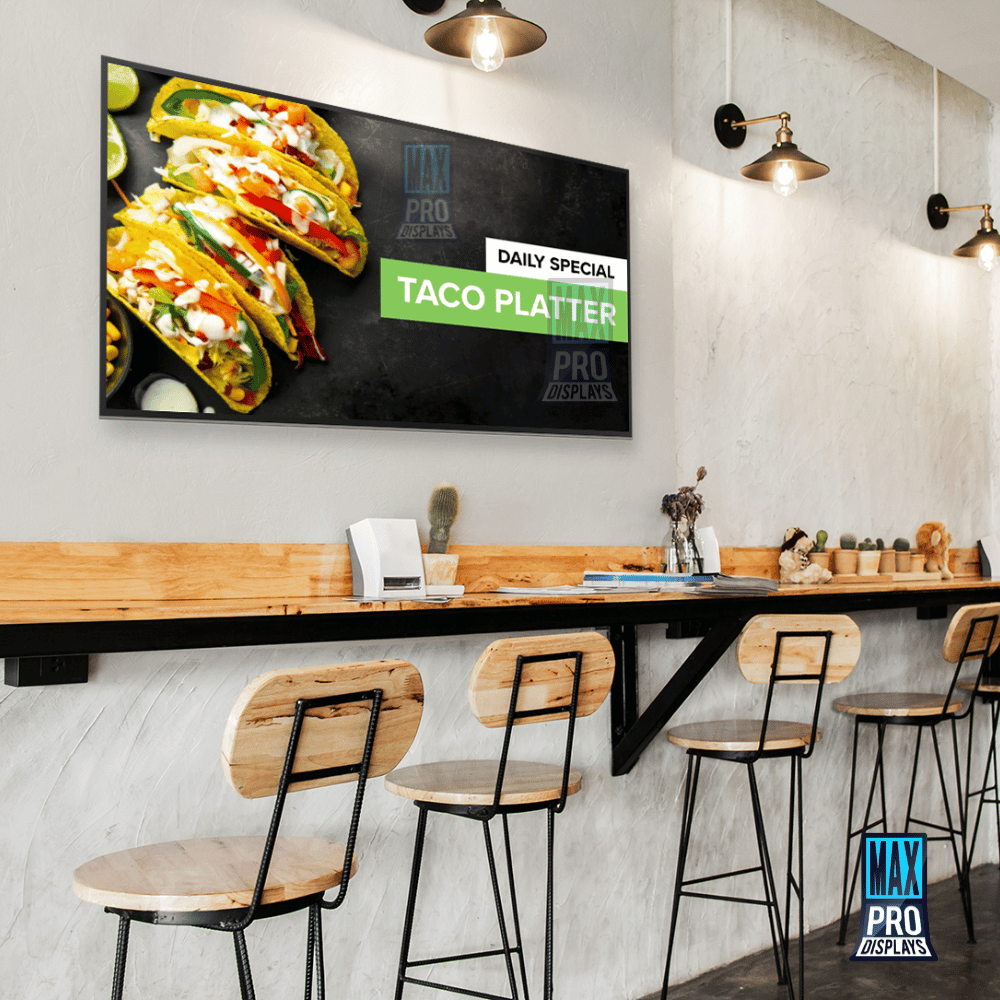
Digital food menu displays offer significant benefits to restaurants by enhancing both customer experience and operational efficiency. First and foremost, they provide a visually engaging platform that allows customers to easily check and see the food graphics of menu or view high-quality images or videos of dishes.
Digital displays also allow for real-time updates, so restaurants can quickly modify prices, remove out-of-stock items or introduce new menu offerings without the need for printing new menus. This reduces costs and ensures that the information customers receive is always accurate and up-to-date.
Features
Features of Digital Food Menus:
- Interactive User Interface
- Benefit: Customers can easily browse through the menu with images, detailed descriptions, and filtering options, helping them make faster and more informed decisions.
- Real-time Updates
- Benefit: Restaurants can instantly update menu items, prices, availability, or promotional offers, ensuring customers always have access to the latest information.
- Customization Options
- Benefit: Digital menus allow customers to customize their orders (e.g., ingredient modifications, portion sizes), improving the dining experience by offering more choices.
- Multilingual Support
- Benefit: Digital menus can be set up in multiple languages, making it easier for non-native speakers or tourists to understand the menu, improving accessibility.
- Nutritional Information & Allergen Details
- Benefit: Customers can view the nutritional content of dishes or identify potential allergens, helping them make healthier or safer choices.
- Search and Filter Functions
- Benefit: Customers can quickly search for specific dishes based on dietary preferences (e.g., vegetarian, gluten-free) or by dish type (e.g., appetizers, desserts).
- Interactive Photos and Videos
- Benefit: High-quality images or videos of menu items can entice customers, increase engagement, and help them visualize what they’re ordering.
- Integration with POS (Point of Sale) System
- Benefit: Orders placed via digital menus can be seamlessly transmitted to the kitchen, reducing order errors, speeding up service, and improving overall operational efficiency.
- QR Code Access
- Benefit: Customers can access the menu using a QR code on the table, minimizing physical contact and creating a hygienic, touch-free experience.
- Dynamic Pricing (Happy Hour, Special Offers)
- Benefit: Digital menus can automatically adjust pricing based on time-of-day promotions, happy hours, or special discounts, enhancing revenue management.
- Order Tracking and Delivery Integration
- Benefit: Digital menus integrated with delivery platforms allow customers to track their orders in real-time, providing more transparency and reducing customer anxiety.
- Contactless Payment Integration
- Benefit: Digital menus often support integrated payment systems, enabling customers to pay directly from their phones or at the table, enhancing convenience and reducing wait times.
- Order History and Preferences
- Benefit: Returning customers can have their past orders and preferences saved, making it easier for them to reorder or customize their favorite meals quickly.
- Sustainability and Paper Reduction
- Benefit: Digital menus eliminate the need for printed paper menus, reducing waste and supporting sustainability initiatives.
Benefits of Digital Food Menus:
- Enhanced Customer Experience
- Customers enjoy a seamless, personalized, and engaging dining experience with easy-to-read menus, customization options, and more.
- Increased Order Accuracy
- With digital ordering systems, there’s a reduced risk of human error in taking orders, ensuring that the kitchen gets the right information and order specifications.
- Cost Efficiency
- Eliminates the need for printing, updating, and distributing physical menus. Long-term savings on menu revisions and material costs.
- Faster Service
- Digital menus can speed up the ordering process, reduce wait times, and allow for quicker order adjustments and modifications.
- Improved Operational Efficiency
- With digital menus integrated with POS and kitchen management systems, orders are processed more efficiently, leading to smoother kitchen operations.
- Increased Sales & Upselling Opportunities
- Digital menus can display high-margin items, add-on suggestions, or “suggested pairings” (e.g., wine pairings with meals), encouraging customers to purchase more.
- Personalization
- The ability to store customer preferences, dietary restrictions, and past orders allows for a more personalized dining experience, which can enhance customer loyalty.
- Data Collection & Analytics
- Businesses can gather valuable customer data on popular items, peak ordering times, and customer preferences, which can be used to improve menu offerings and marketing strategies.
- Increased Hygiene and Safety
- As customers use their own devices to access the menu via QR codes, digital menus reduce the need for handling shared physical menus, aligning with health and safety standards.
- Environmentally Friendly
- Reduces paper waste and contributes to sustainability efforts by moving to a digital platform.
- Adaptability for Future Trends
- Digital menus can easily evolve with changing market demands, dietary trends, or customer preferences without needing a complete redesign.
- Promotional Flexibility
- Easy to add or update time-sensitive promotions (e.g., limited-time offers, daily specials) directly on the menu in real time.
Leave a comment